Wasp nest removal: do it yourself or call a professional?
Wasp nest removal is one of the most requested jobs for pest controllers in summer. From June onwards a nest grows quickly: what starts in May as a ball the size of a golf ball can hold thousands of wasps by August. If the nest hangs well away from your home, you can often simply leave it. If it sits next to a door, patio, roof edge or a child's bedroom, you will want it gone.
In this guide you will read how to recognise a wasp nest, when you can tackle it yourself and when you are better off calling a professional. You will also find a cost indication for 2026, an explanation of how a pest controller works and tips to prevent new nests. To hire someone straight away, see the top 3 pest controllers in your city.
Recognising a wasp nest: how to find where it is
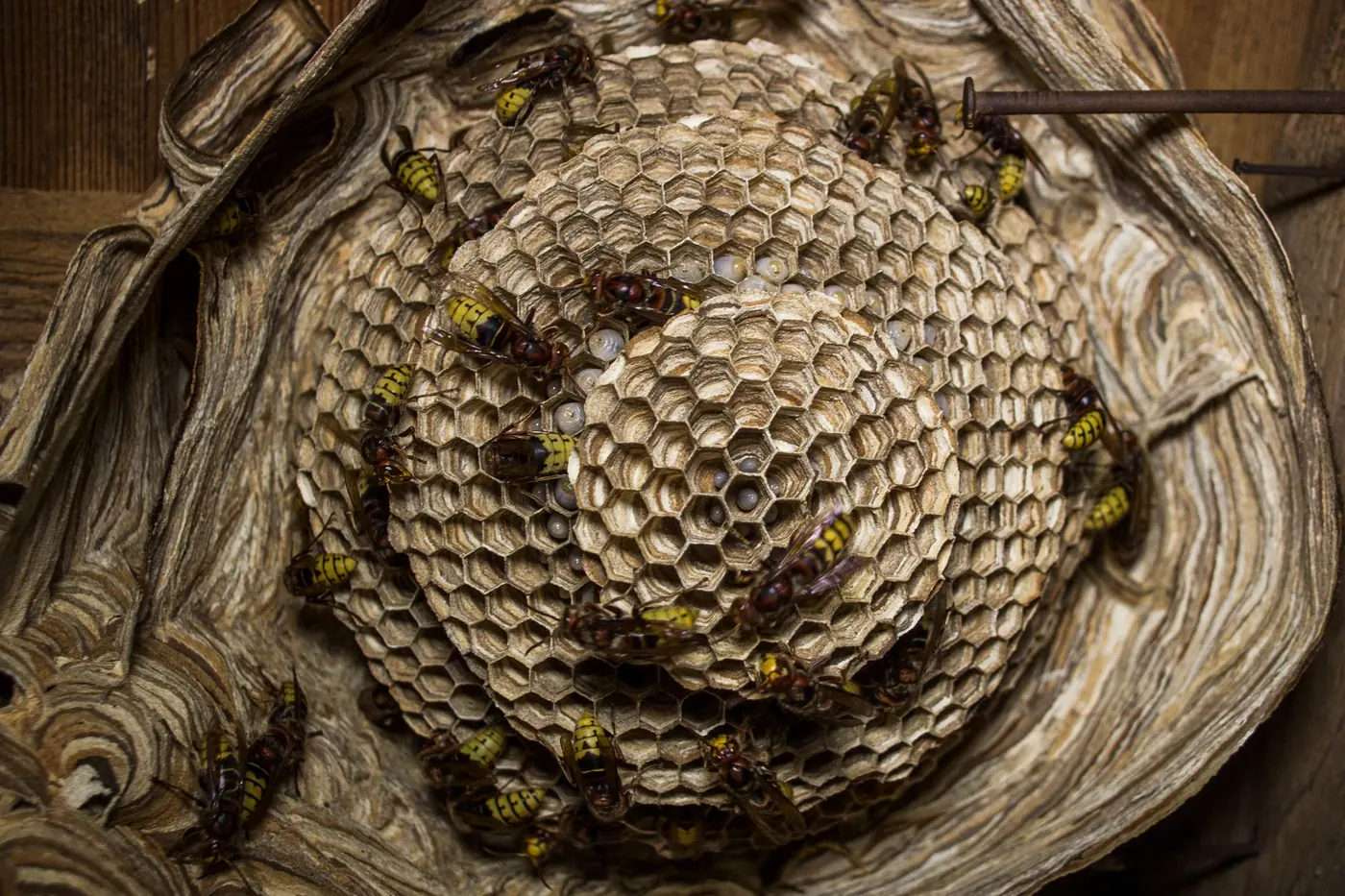
If you keep seeing wasps flying in and out of the same opening, there is almost certainly a nest there. Typical spots are the roof edge, the cavity wall, a shed, a roller shutter box, a bird box or the ground under a shrub. A free-hanging nest looks like grey paper, because wasps build it from chewed wood. Nests in the cavity wall or behind panelling are invisible, but you sometimes hear a soft crackling or rustling in the wall. Not sure whether you are dealing with wasps, bees or bumblebees? Bees are rounder and hairier and fly more slowly. That distinction matters, because bees are protected and a bee colony should be relocated by a beekeeper rather than destroyed.
Wasp nest removal: do it yourself or hire a professional?
A small, easily reachable nest at an early stage (April or May, the size of a ping-pong ball) can sometimes be dealt with yourself using a DIY-store product, or by covering and removing it in the evening when the wasps are calm. Only do this in protective clothing and never from a ladder. In every other situation, professional removal is the sensible choice: nests from June onwards, nests in the cavity wall or high up, and nests near anyone who is allergic to wasp stings. A pest controller has professional biocides that work on the whole nest, is allowed to use them thanks to a professional competence certificate (KPMB) and knows the risks. Wasps are not a protected species, so wasp control is legally permitted. That does not apply to a bee nest: call a beekeeper instead.
How a professional wasp controller works
A professional works in fixed steps. First they pinpoint the nest using the flight path and your observations. Then they apply a powder or mist at the nest entrance using a lance or sprayer. The wasps carry the product inside, so the whole colony dies off within 24 to 48 hours. A free-hanging nest is often taken away; a nest in the cavity wall stays put and dries out. Good pest controllers follow IPM (Integrated Pest Management): they first check whether treatment is really necessary, use as little product as possible and advise on preventing a repeat. Many companies offer a guarantee: if the nest comes back to life within a few weeks, they return free of charge.
Wasp nest removal costs: what you pay in 2026
The cost of wasp nest removal in 2026 is usually between €75 and €150 per nest, including VAT and often including the call-out fee. If there is a second nest at the same address, you typically pay €25 to €50 extra for it. Hard-to-reach nests, for example high in the roof apex or deep in the cavity wall, can cost up to around €200 because an aerial platform or extra equipment is needed. Ask in advance whether the price includes VAT and the call-out fee and whether a guarantee is given. The prices in the table are an indication; the exact rate depends on your region and the situation on site.
Price indication 2026 per pest
| Pest | Indication | Notes |
|---|---|---|
| Wasp nest removal (standard) | €75 to €150 | Per nest, including VAT, call-out fee often included |
| Additional nest at the same address | €25 to €50 | Per extra nest during the same visit |
| Hard-to-reach nest | up to €200 | High in the roof apex or in the cavity wall, sometimes with an aerial platform |
Indications for private customers, including VAT, based on public rates in 2026. The actual price depends on severity, accessibility and the number of visits. Always ask for a fixed price in advance.
Preventing a wasp nest: keeping wasps at a distance
Prevention starts in spring. The queen looks for a sheltered spot from April, so seal gaps around roof edges, ventilation grilles and roller shutter boxes before she can build a nest. Fit insect screens on windows and keep rubbish and fruit covered, because sweet smells attract wasps. In May and June, check your shed, roof overhang and bird boxes for small, newly started nests. A trap with sweet water and a dash of washing-up liquid at the edge of the garden keeps workers away from the patio. If you get a nest in the same place every year, have a pest controller look at the structure and seal the entrance permanently.